Overview
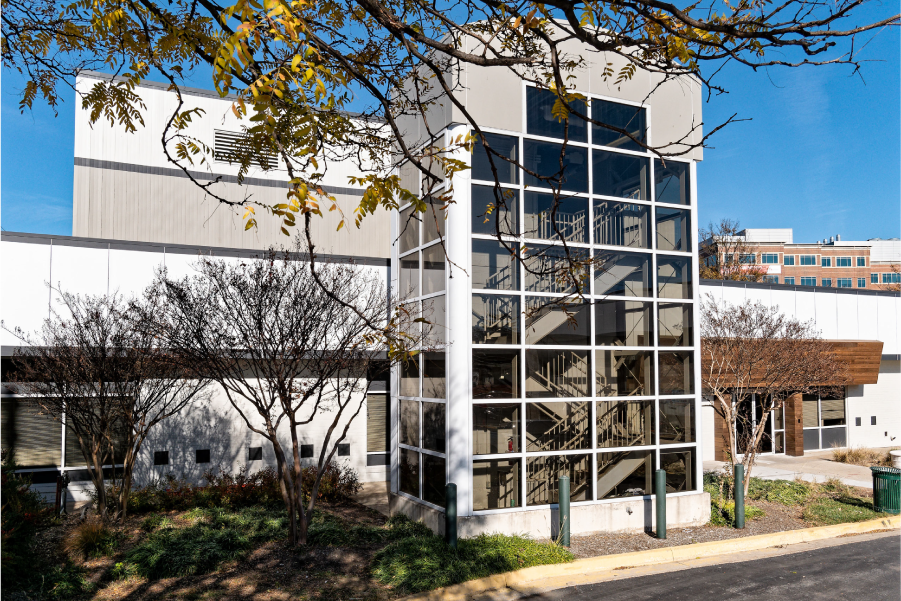
Nearly $419,000 in annual utility costs made it clear Fisher Lane needed more than a one-for-one equipment replacement. The Rockville laboratory and office building was operating with aging mechanical systems, high ventilation demands, and significant energy waste.
Laboratory buildings typically use more energy than offices because they must condition large volumes of outside air. At Fisher Lane, oversized equipment, 24/7 ventilation, and exhaust air leaving the building without heat recovery added to the load.
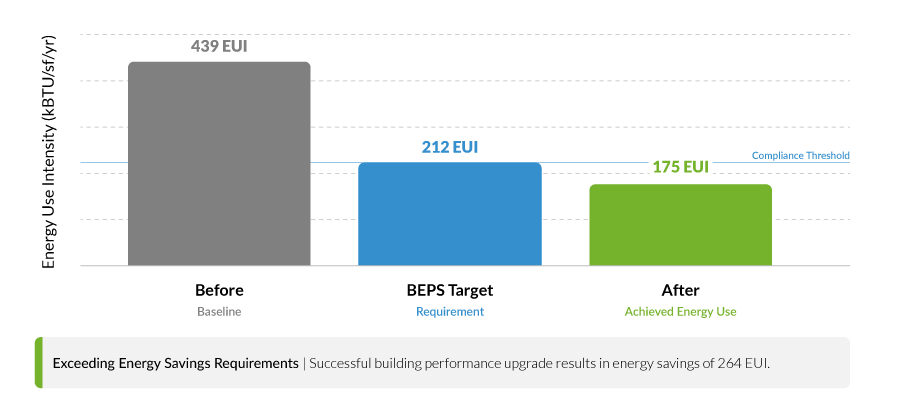
The building also faced a larger capital decision. Its chillers and boilers were nearing the end of their useful life, and its Energy Use Intensity (EUI) was 439 kBtu per square foot per year, well above Montgomery County’s BEPS target of 212.
Spectrum evaluated the mechanical systems and the project economics together, identifying opportunities to right-size equipment, recover wasted energy, improve controls, and pursue available funding.
By looking at system performance and funding together, Spectrum helped turn a necessary equipment replacement into a stronger capital investment.
Challenge
High Energy Costs Were Only Part of the Problem
Fisher Lane was operating at more than 14 air changes per hour, 24 hours a day while exhausting approximately 25k CFM of conditioned air without heat recovery.
The central plant was also oversized and complex. Two aging 270-ton chillers were serving a calculated cooling load of approximately 180 tons. The system included end-of-life steam boilers, steam humidification, and as many as 17 pumps in a primary-secondary configuration.
Controls added to energy waste. Pumps could run while the chiller was off, and ventilation schedules did not reflect actual occupancy.
A one-for-one equipment replacement would have carried many of those inefficiencies forward. The project team needed to determine the actual loads, simplify the system, and identify which improvements could qualify for funding.
Solution
Right-Size Equipment, Recover Energy, and Improve Control
Spectrum began with a feasibility study to determine the building’s actual cooling, ventilation, and operating requirements.
The analysis showed the existing equipment was oversized and unnecessarily complex. The project replaced two 270-ton chillers with two 150-ton air-cooled scroll chillers and converted the pumping system from primary-secondary to variable primary operation. The new configuration reduced the chilled-water pumps from as many as 17 to two.
Aging steam boilers were replaced, humidification moved off the steam loop, and heat recovery was added to three existing air-handling units. A new building automation system coordinated equipment operation and adjusted ventilation around occupancy.
Air changes were reduced from 14 to 11 per hour while preserving the capacity needed for future laboratory tenants.
|
Make Funding Part of the Project Plan Spectrum evaluated funding opportunities alongside the engineering work, before equipment selections were final. The team developed energy and cost models, evaluated applicable tax programs, identified eligible utility and grant opportunities, and managed the documentation required for applications. Grants and utility incentives reduced the project cost by $517,000. The financial analysis also identified potential tax benefits through equipment expensing and bonus depreciation. |
Results
Funding Covered 21% of the Initial Project Cost
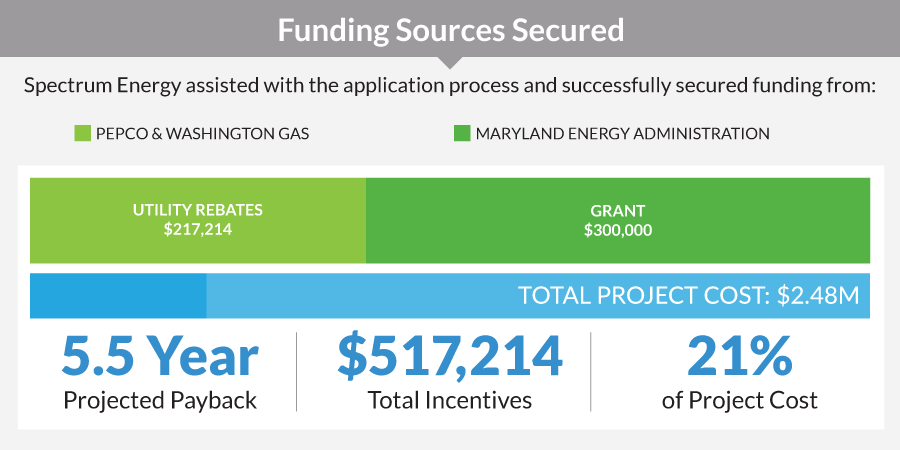
Spectrum helped secure $217,214 in utility rebates and a $300,000 Maryland Energy Administration (MEA) grant reducing the $2.48 million project cost to approximately $1.97 million.
Tax Benefits Further Improved Project Economics
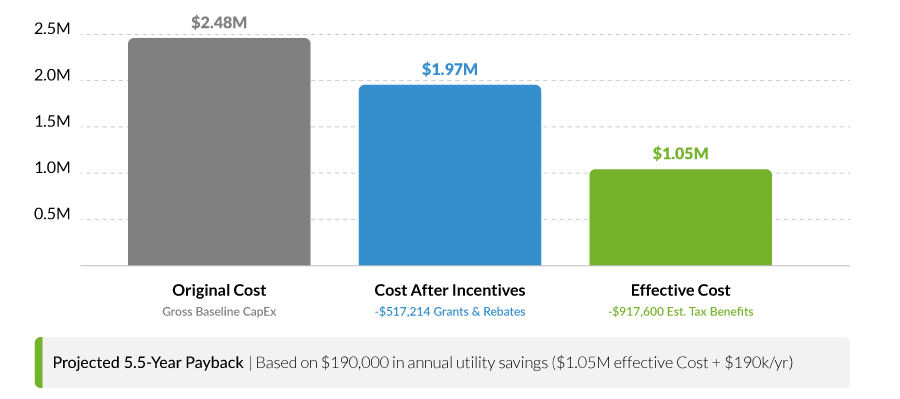
The financial analysis identified an additional $917,600 in estimated tax benefits from expensing eligible equipment and bonus depreciation. Combined with the grants and incentives, those estimates reduced the effective cost to approximately $1.05 million.
With $190,000 in projected annual utility savings, simple payback improved from 10.4 years to 5.5 years.
Projected Annual Utility Costs Fell 45%
The retrofit is projected to save 833,055 kWh of electricity and 27,590 therms of natural gas annually reducing utility costs by 45%.
- 50% less electricity use
- 32% less natural gas use
EUI Fell 60%, Below the BEPS Target
Fisher Lane’s EUI fell 60%, from 439 to 175 kBtu/SF-yr, bringing the building below Montgomery County’s BEPS target of 212 kBtu/SF-yr.
The project is also expected to reduce annual emissions by 384.7 metric tons of CO2e.