
A Data-Driven Roadmap Lowers Energy Costs Across Almost 70 Schools
- Spectrum Energy helped FCPS identify $300K–$2M+ in potential annual savings and build a data-driven roadmap for energy performance, funding, and decarbonization.
Overview
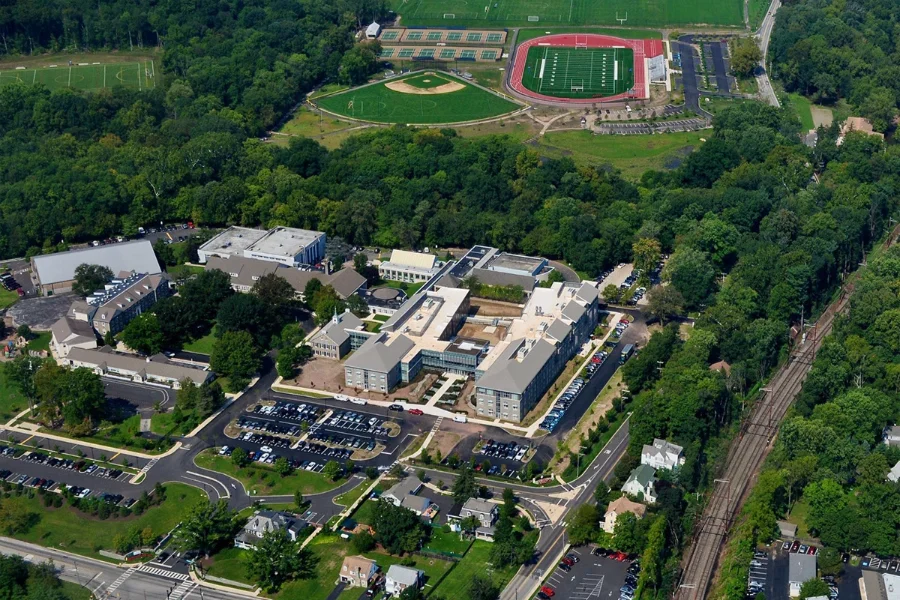
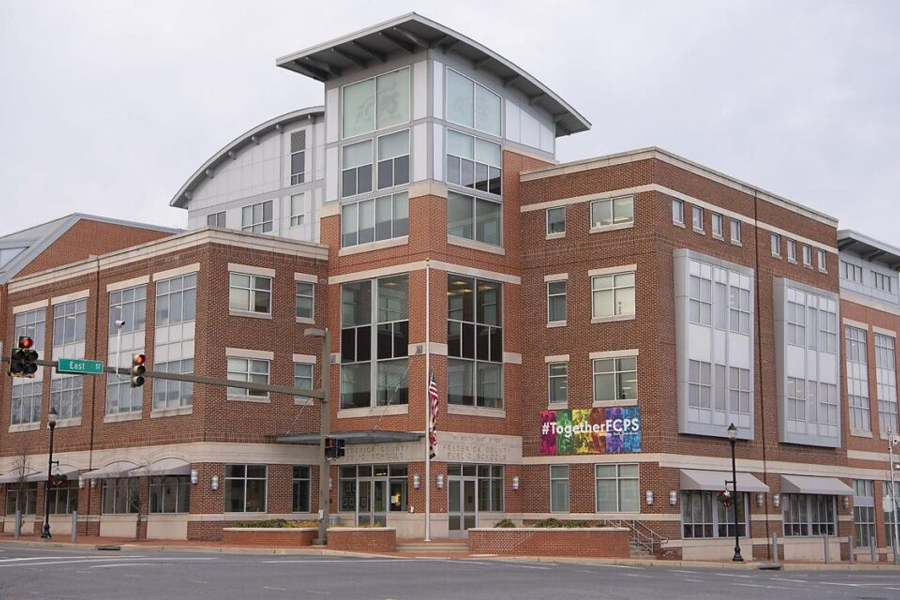
Frederick County Public Schools (FCPS) manages a portfolio of almost 70 facilities serving almost 48K students.
As energy costs increased and state requirements evolved, the district needed a more coordinated approach to managing building performance. Through the Maryland Energy Administration (MEA) Decarbonizing Public Schools Program, FCPS engaged Spectrum to develop a structured K-12 energy management strategy that could standardize data, support capital planning, and build a practical path toward Net Zero Energy (NZE) and long-term decarbonization.
Challenge
FCPS had already taken steps toward sustainability, but scaling those efforts across dozens of schools introduced more operational and planning complexity.
The portfolio includes buildings of varying ages, system types, and levels of prior renovation. Without a consistent way to evaluate performance, it was difficult to compare facilities or prioritize investment across the district.
Approximately 80% of FCPS buildings were operating above the national median EUI, which pointed to widespread inefficiency across the portfolio. That gave FCPS an opportunity to lower energy costs, target the highest-need facilities first, and support capital planning with measurable performance data.
At the same time, Maryland’s Building Energy Performance Standards (BEPS) require public institutions (for K-12 non-school buildings) to reduce emissions and improve building performance over time, increasing the urgency for a more coordinated and measurable approach.
Energy data existed across individual schools, but it was not consistently structured for portfolio-wide analysis. Tracking relied on manual processes, making it difficult to compare buildings, identify trends, or prioritize improvements at scale.
Key challenges included:
- Limited visibility into building-level energy performance
- Inconsistent data tracking across facilities
- Difficulty prioritizing capital improvements across a large portfolio
- Rising utility costs, which increased by approximately 65% to over 100% between 2015 and 2025
- Long-term goals for Net Zero Energy and decarbonization by 2040
These challenges are common for large school systems managing multiple facilities without a consistent framework for comparing performance or planning investments.
Solution
Spectrum Energy developed a structured, portfolio-wide approach focused on standardizing data, prioritizing investments, and supporting long-term planning.
1. Portfolio Benchmarking and Data Framework
- Benchmarked all facilities using ENERGY STAR Portfolio Manager®
- Defined consistent performance metrics, including Site EUI, cost per square foot, ENERGY STAR Score, and total energy cost
- Established a repeatable process for monthly utility data tracking and reporting
- This gave FCPS a consistent basis for comparing buildings and identifying performance gaps.
2. Three-Tier Planning Framework
- Spectrum applied a three-tier structure to ensure recommendations were relevant across the full portfolio:
- New construction and full renovations
- Major system upgrades and partial renovations
- Existing building performance improvements
- This structure allowed FCPS to align energy strategies with different project types and capital planning timelines.
3. Facility Prioritization and Performance Targeting
- Identified buildings with the largest gap between current and target EUI
- Flagged facilities with the highest potential for cost and energy reduction
- Established portfolio-level performance targets to guide decision-making
- This reduced the risk of investing in lower-impact projects and helped focus resources where they could have the greatest effect.
4. Energy Efficiency and System Evaluation
- Evaluated HVAC systems, lighting, controls, and building envelope performance
- Identified operational improvements that could be implemented with minimal cost
- Applied lifecycle cost analysis to compare long-term value, not just upfront cost
5. Renewable Energy and Electrification Strategy
- Screened facilities for solar PV and geothermal feasibility
- Evaluated system compatibility, electrical capacity, and operational constraints
- Assessed ownership models including PPA and direct ownership
- Analysis indicated that select schools could potentially offset up to approximately >100% of energy use through on-site solar, depending on site conditions.
6. Funding, Policy, and Compliance Alignment
- Connected recommended projects to MEA funding, utility incentives, and financing options
- Provided updates to FCPS Energy Policy 204.1 and Regulation 200-18
- Aligned with IAC guidelines
- Followed MD Annoted Code
- This ensured that future projects could move forward with clearer funding pathways and stronger documentation.
Details:
Owner:
Frederick County Public Schools (FCPS)
Building Type:
K–12 Education
Scope:
67 facilities
Services Performed:
Energy benchmarking, KPI development, Net Zero Energy and decarbonization planning
Incentives Captured:
Maryland Energy Administration (MEA) Decarbonizing Public Schools Program (Capacity Building Grant)
Annual Savings:
$300,000–$2.3M potential (modeled)
Results
Clearer capital planning
-
Clear visibility into which facilities require the most attention
-
Ability to compare buildings using the same performance metrics
-
Stronger alignment between building condition and capital planning decisions
Measurable savings potential
-
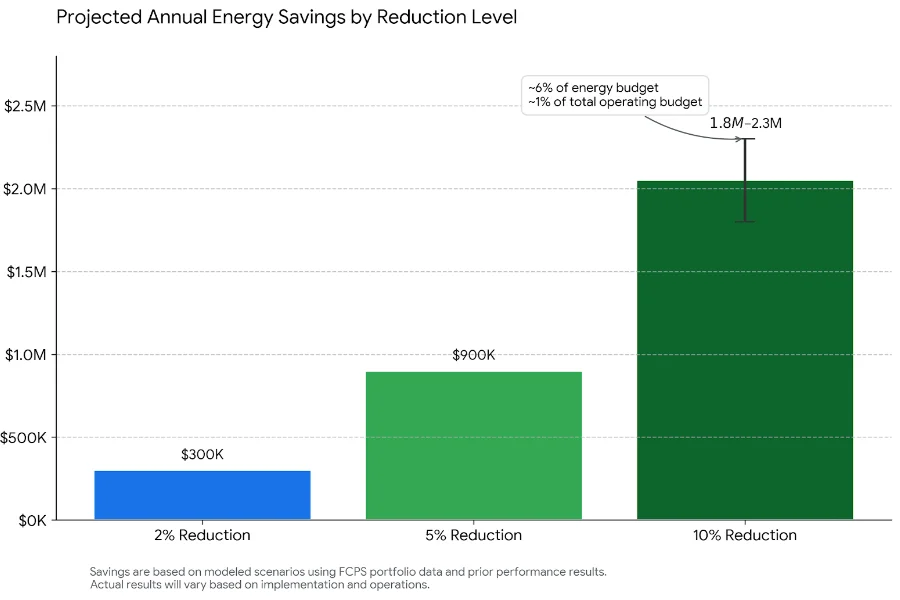
Approximately $300,000 in potential annual savings at a 2% reduction in energy use
-
Approximately $1.8M to $2.3M in potential annual savings at a 10% reduction
-
Savings projections supported by prior performance contract results showing about 10% energy reduction across 23 FCPS schools
Positioned for grants and incentives
-
Alignment with MEA program requirements and funding criteria
-
Clear documentation to support incentive and grant applications
-
Ability to connect project scope with available funding sources
Path toward net zero energy
-
Targeted energy reductions of approximately 5% every five years through 2040
-
A framework for tracking performance and progress over time
-
Integration of energy planning with operations, policy, and capital improvements
Project Annual Energy Savings
Modeled savings represent approximately 6% of FCPS’s energy budget and about 1% of its overall operating budget, creating flexibility for staffing, capital improvements, or reinvestment.
Conclusion
FCPS went from a fragmented energy management effort to a coordinated and data-driven structure.
With a clear baseline, prioritized opportunities, and alignment between technical planning and funding, FCPS is better positioned to make informed investment decisions and improve building performance over time.
For school systems facing similar challenges, this approach provides a practical way to turn energy data into actionable planning and long-term cost reduction.
More Success Stories to Explore
Find out how Spectrum Energy is leading the industry


Want similar results?
Spectrum Energy can help you lower costs, improve comfort, and meet local regulations—without draining your capital budget.